
The Winter Gutter Checklist (15 Minutes, Big Payoff)
Quick steps to keep meltwater moving, protect your roof and siding, and avoid surprise leaks.
Why this matters
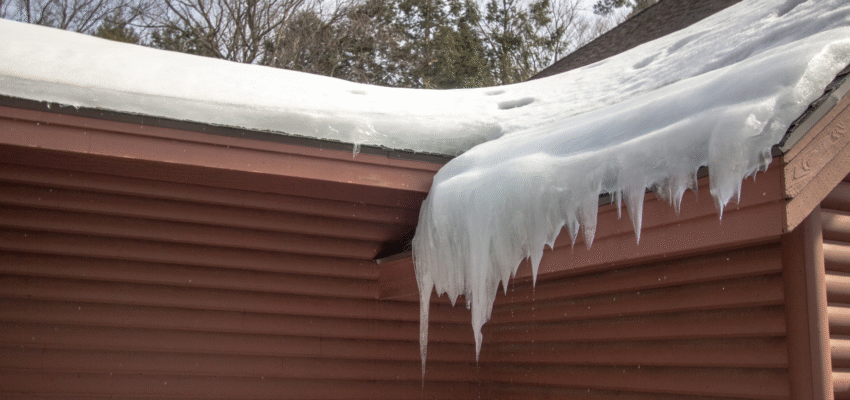
In winter, clogged gutters trap water. When it refreezes, ice pushes under shingles and overflows onto siding and walkways. A few minutes of care keeps water away from your house and helps prevent ice dams.
What you need
- Stable ladder and a helper (if possible)
- Gloves and safety glasses
- Small scoop or gutter trowel
- Bucket or yard bag
- Garden hose with spray nozzle (on warmer days)
- Gutter guards brush (optional)
Your 15-minute checklist
- Walk the perimeter. Look for sagging gutters, gaps at joints, and downspouts that dump near the foundation.
- Clear the top layer. From the ladder, scoop out leaves and needles near downspouts first. Work toward the corners.
- Open the downspouts. Make sure the top inlets are clear. If safe and above freezing, run brief water to confirm flow.
- Extend the flow. Add downspout extenders so water discharges 3 to 6 feet away from the house.
- Check hangers and pitch. Tighten loose brackets. Gutters should slope slightly toward the downspout.
- Scan for icing spots. Shady areas and roof valleys freeze first. Plan extra checks after storms.
Tip: If it is below freezing, skip the hose test and stick to debris removal and visual checks.
After each storm
- Knock off small icicles from ground level only. Do not chip ice from the gutter with tools.
- Use a roof rake to pull the first 3 to 4 feet of snow off eaves. Less snow means less meltwater feeding the gutters.
- Re-check downspout outlets and extensions after plowing or shoveling.
Safety first
- Set the ladder on solid, level ground. Keep three points of contact.
- Avoid metal ladders near power lines.
- Do not climb on an icy roof. Use tools from the ground whenever possible.
Smart upgrades for winter
- Downspout extenders to push water away from the foundation.
- Drip edge and flashing tune-up to guide water into the gutter.
- Gutter guards to reduce debris (still inspect a few times each season).
- Heat cable in trouble spots installed by a pro for ice-prone eaves and valleys.
When to call a pro
- Gutters pull away, sag heavily, or leak at seams
- Water stains on fascia, soffit, or inside ceilings
- Regular ice dams along the same edge of roof
- Two-story access you cannot reach safely
.yw-article {max-width: 840px; margin: 0 auto; font: 16px/1.6 system-ui, -apple-system, Segoe UI, Roboto, Arial, sans-serif; color:#0f172a;}
.yw-article h1 {font-size: 32px; line-height:1.25; margin: 0 0 8px;}
.yw-article h2 {font-size: 22px; margin-top: 28px;}
.yw-article__dek {color:#334155; margin: 0 0 18px;}
.yw-article ul, .yw-article ol {padding-left: 22px;}
.yw-cta {margin: 28px 0; padding: 16px 18px; background:#f1f5f9; border:1px solid #e2e8f0; border-radius:10px;}
.yw-cta a {color:#18533f; font-weight:600; text-decoration: none;}
{
"@context":"https://schema.org",
"@type":"FAQPage",
"mainEntity":[
{
"@type":"Question",
"name":"How often should I check gutters in winter?",
"acceptedAnswer":{"@type":"Answer","text":"Check after major storms and at least once a month. Clear downspout inlets first and keep water discharging 3 to 6 feet from the foundation."}
},
{
"@type":"Question",
"name":"Can I run water through gutters below freezing?",
"acceptedAnswer":{"@type":"Answer","text":"Avoid hose tests below freezing. Remove debris and inspect visually. Run water only on warmer days to confirm flow."}
},
{
"@type":"Question",
"name":"Do gutter guards stop ice dams?",
"acceptedAnswer":{"@type":"Answer","text":"Gutter guards reduce debris but do not prevent ice dams. Ice dams are mainly caused by heat loss from the house and roof snow melt."}
},
{
"@type":"Question",
"name":"How far should downspouts discharge?",
"acceptedAnswer":{"@type":"Answer","text":"Aim for at least 3 to 6 feet away from the foundation using extensions or splash blocks to keep meltwater from pooling at the house."}
}
]
}